A huge thank you to everyone who entered the Hot Torpedo competition. Everyone who entered of course gets a shirt. I hope that you like them and get excellent use out of them. I’ve been living in the same two shirts for several years, here in the jungle, and despite being washed a couple of times they have not faded!
Thanks again – and thanks to Tim Kempton for the idea in the first place. đ
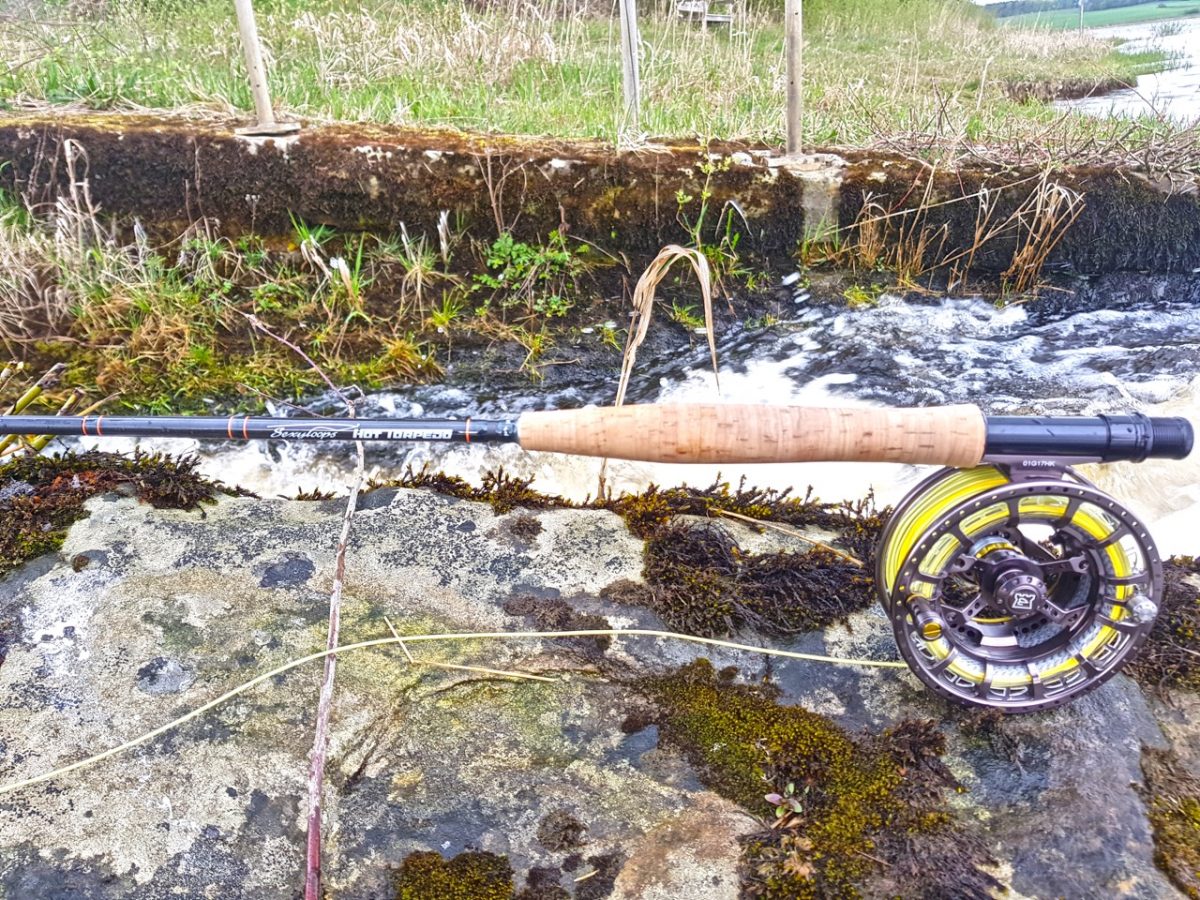
One of the services we offer is a complete refurbishment of your Hot Torpedo. The cost varies but is generally 100GBP which includes any replacement rings, complete rewhipping, new decals and return shipping. If we need to fit a new cork grip then itâs slightly more. Itâs extemely unlikely that we will have to replace Titanium Torzite Rings – you would probably have to take an angle grinder to destroy those đ
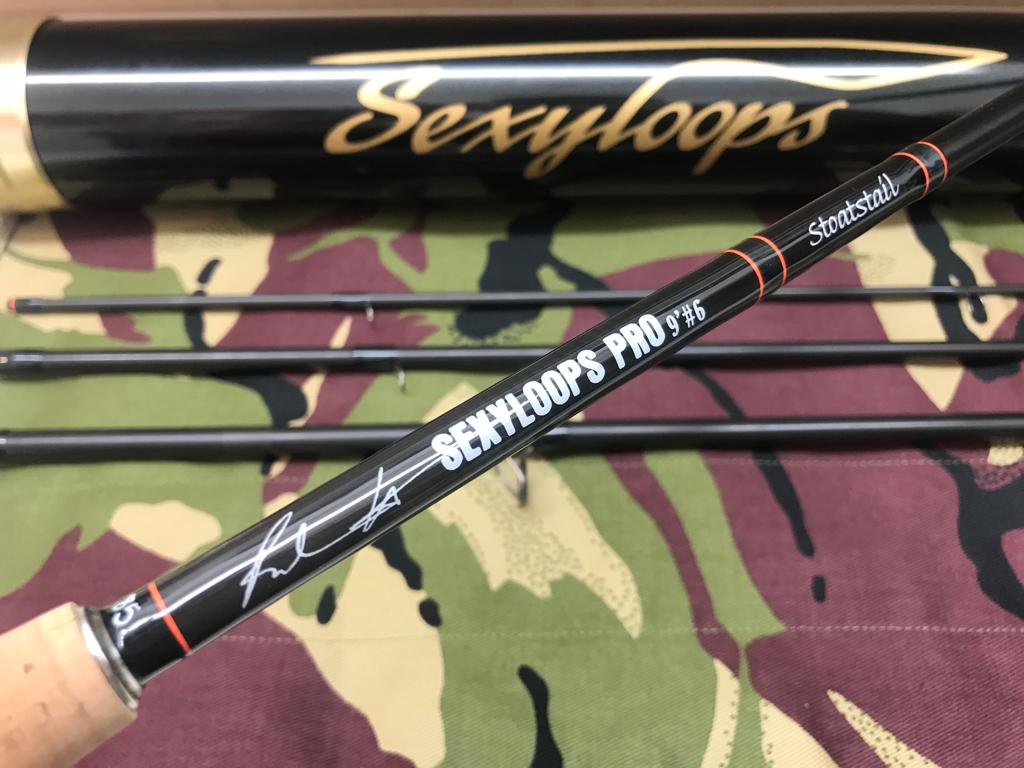
Stu  Tripney MCI doesn’t half make life interesting for us! He asked us for a camouflage 10WT. “Easy” says I, “let me just find out if it can be done!” đ
We tried a lot of different finishes at the factory in Spain, before finally settling on spray painting. Lee got the blank, found some camouflage rod building thread and a camouflage grip.
It wasn’t at all easy in the end. And at several points we decided that we would never do this again! However Stu has also ordered a camouflage HT4, for Stealth. So we shall see what he makes of this masterpiece before moving along to build that one!
Here is an essential section of flies that should catch you fish just about anywhere. 70 flies in sizes 16, 18 and 20. Perfect HT4 territory fishing 7X .10mm tippets.
Dry Flies: Â Olive Emerger, Yellow Emerger, Peacock Strung Emerger, Olive Dun, Black Ant CDC
Nymphs: Pheasant Tail Nymph, Red Tag Nymph, Olive Nymph, Peacock Strung Nymph, Cream Larva Nymph
Tied once again by Master Djordje Andjelkovic and presented in the Sexyloops wooden fly box. If you haven’t fished CDC flies before then prepare to be amazed at how effective they are in these small sizes. To dry them you can use some tissue paper, or Legend Mika’s elastic band technique.
I thought I would take the time to run through some of the items available in the Sexyloops tackle shop. First up (apart from the Sexyloops Hat which is being redesigned for even more STEALTH) is the Essential Balkan Fly Selection. This is 120 flies that are not only good in the Balkans but pretty useful to have in almost every other water!
For dry flies we have Parachute Pheasant Tail, Adams, Cream Caddis, Olive Dun, Black Klinkhammer, Royal Wulff. For nymphs we have Pheasant Tail Nymph, Red Tag Nymph, Hare’s Ear Nymph, Peacock Strung Nymph, Black Mamba Nymph, San Juan Worm. I’m not sure that the San Juan Worm is really a nymph, but it’s close!
This is a selection of flies tied by my good friend Djordje Andjelkovic in Serbia. Djordje is an MCI and a really top bloke. The fly selection comes in a wooden Sexyloops box, made by one of our mutual friends and the entire package is a very nice piece of kit indeed. I think I would be happy fishing a selection like this just about anywhere!
Djordje is an excellent fly tyer – far better than I, in fact that probably goes for just about everyone. The all inclusive price of 250GBP works out at the box costing 10GBP (which is a superb deal, because the box should be around 25-30GBP), 2GBP per fly and free worldwide shipping.
At 2GBP per fly, yes you are looking at a quality fly, first class hook, a proper professional fly tyer who can truly fish as well. To put this in perspective when I was selling flies (I know, “who the hell would buy them?”) 30-odd years ago I was selling them for 50p per fly. I reckon 2GBP nowadays is an excellent deal.
An is one of my best customers; he has the full Hot Torpedo range and his girlfriend, Shermaine, owns a couple too! So by way of thanks I invited them for a few days of fishing with me in the Jungle.
An and Shermaine
Now if youâve read anything on Sexyloops, youâll know that I always say that the first time you come here you wonât catch any fish! Occasionally someone sneaks one past me – Flavio for example completely ignored me and caught four Snakehead on the very first day. But generally, unless you do a longer stint of a week or more, this statement still holds water.
Thatâs not because there are no fish here; itâs because the skill set required so that the fish sees your fly is really quite extraordinary and it takes some dedicated practise, as well as doing a few things differently. In Saltwater fly fishing for example, a discipline where quality casting is required, itâs often possible to put the fly anywhere within two metres and still catch the fish. Indeed sometimes they will swim many more metres than this to take your fly. Here you donât have this luxury and instead need to put the fly, quite literally, in an area the size of a dinner plate, without warning and you have only one second to do so.
The chase is on!
An is a fast learner (and already an excellent caster) and so while he didnât land any fish this trip, on the second day with me he had a couple of follows (three to be precise) and on last day he hooked a Snakehead briefly and – wait for it – also hooked a Gourami. (He did everything right with the Gourami; it only didnât stick because it was his first time here).
Searching…
Lots of fun. It would have been nice to see some fish, and Iâm sure that next time he will. Remember if you have a full set of Hot Torpedos you too can join me for a couple of days Jungle Fishing!  Talking of which,  Christmas is over; itâs  time to start buying tackle again.  đ
While fishing with my Hungarian friend, Peter, in England, I managed to smash his original HT6 tip while playing a tree on the backcast. Much to Peterâs amusement.
So new tip and some rod pimping as well as a butt section for Kolos – Peterâs monster son.
This is an interesting one. Sakari for years has been experimenting with fibreglass butt sections (carbon tips) for true lifting power, quite literally picking up 10kg buckets from the top floor of a house. When we got together at the Worlds in Cumbria I was very surprised when I cast his rods to find out a) how well the cast and b) how well they fought! In fact I was convinced straight away and told him so – thanks Sakke!
Mikael Blomberg managed to crack the experimental HT12 picking up 100ft of line in a carry competition – so that was a  good test!  Alejandro has since strengthened that section in Spain with some cross weave carbon. We have it back in action now.
Here in England, Lee Martell (Sexyloops Rod Artist) had a couple of old Shakespeare Ugly Stik rods laying around, one of which he stripped and rebuilt for the lower section of the HT12 and so now we have the new prototype HT12 and HT12u to test. Exciting stuff – it might be a bit over-gunned for Snakehead but I shall give it a go, and then pass it on to someone who has GTs in his backyard.
Quite the transformation!Lee has since said that he will “never do this again” đThe HT12u top and the original 12 prototype butt below.
Photos just in from Tim Kempton who has been having a lot of fun!
HOT TORPEDO FOR GOLDEN DORADO IN ARGENTINA
– TIM KEMPTON
I travelled with an Irish friend Fergus to Argentina via Paraguay and the Iguazu Falls to the IberaWetlands Reserve on the Corrientes River in Northern Eastern Argentina. Â This Wetlands Reserve of 1.3 million hectares is one of the most important in South America, and was established to preserve many of the endangered fish, animals and birds. Â We stayed at Pira Lodge on the border of the National Park, and fished the wetlands by flats boat. Â Jose was our guide. We marvelled at his knowledge of all the âroadsâ and âtracksâ through the marshes.He zipped through this virtual maze at 25 knots...frequently stopping to clear weed from the propeller.m
Our fishing was from 8am to 12, and then 4 pm to 8pm. A 3 hour siesta is standard in Argentina. Dinner at 9. The meals were Cordon Bleau, as they had some of the most renowned chefs in Argentina. No ordinary fishing camp!Fergus has been practising Spanish and did a great job with the translation.Fergipedia was our constant source of information.
Golden Dorado (Salminusbrasiliensis) are a prized freshwater sport fish in the central parts of South America. They are not related to the saltwater mahi mahi(dorado). The prime season is during the summer from November to April. They are temperature sensitive and prefer the hotter weather(20-28oC). They move up and down the riversdepending on the water temperature.They strike aggressively, have a large head with powerful jaws filled with sharp, fly destroying teeth.  The are a magnificent golden colour, hence the name. You know when you have hooked a Dorado, there is a large boil behind the fly, a savage strike. Strip strike and the Doradoleapsmany times out of the waterâŚdip the rod tip to the water when they jump and steer the fish back into the water. Donât trout strike, donât allow and slack or they will throw the hook.
Ifished with two Hot Torpedo rods, an8 wt rod fitted with a WF8F (floating) line and one with WFS(sinkingRio Leviathan 250g) line depending on the depth of the water. We used mostly streamers, and mouse patterns in the late afternoon in the shallows. Â
Sometimesthe dorado work together like a squadron of jet fighters to school up bait fish, and strikes on surface gurglers are spectacular.
Jose poled stealthily along the edges of the wetlands. We saw lots of wildlife and birds including the worlds largest large rodent (Capybara), Marsh deer, Otters, Caimen (freshwater alligator) and lots of water birds  (including the Jacanas and Jabiru). Â
The weather was variable. Some days no wind and hot (30-35oC). Other days overcast, windy and cold. There had been rain the week before we arrived, the river had risen a metre, and together with the cold snap the fish shut down for several days. Plenty of casting practice in the wind...cold, wet and no fish! This was one of those trips…Jose said âyou should have been here last weekâ.
First cast Fergus weighed some at 8 lbs...most were 5-8 lb range. One morning he caught another fish on his first cast...in his classic Fergus Irish brogue he said to me...keep casting until you catch a fishâŚtwo hours and 250 casts later Jose declared it was time to go for lunch. They just werenât feeding.
We were fishing 40/30lb Green Maxima leaders with 30lb Rio PowerFlex Wire Bite Tippet.  This setup seemed at first an overkill and prevented the fish making many runsâŚwe did not fight them on the reel. We soon discovered that this was required to keep the fish out of the weeds..once in the weeds they were hard to dislodge.  The Dorado usually destroyed the flies after 2-3 fish. They mangled the Rio bite wire and it had to be replaced frequently.
A fish over 10lb is regarded as a trophy. I hooked one, it dived into the weeds and the weed acted as a dehooker. I hooked another that looked like a suitcase under water...all was going well until the only small piece of weed floating down the river became entangled around the lineâŚit ran down the line and again ⌠another dehookerâŚthe fish wonâŚthere is a lot of weed! The biggest Jose has seen landed was 23lb.
We caught other species...San Antonio, Pira Pita and Palomata (a species of wetlands Piranha).Piranhas have one of the strongest bites found in bony fishes.The Piranha have awesome teeth and completely destroyed the flies.It is apparently a myth that Piranhas attack peopleâŚmakes for good comics and movies!
When the weather was kind to us, the sight fishing was spectacular. The water was gin clear and we could to hunt the Dorado. Long casts and delicate placement of the fly. Land the fly near the fish and they would attack it. At other times, we fished the fast, deeper water with the sinking lines.
A totally amazing experience. Dorado are a great sportfishâŚthey give aggressive takes,  jump and lot and fight hard.