Graeme Christie | Tuesday, 7 April 2026
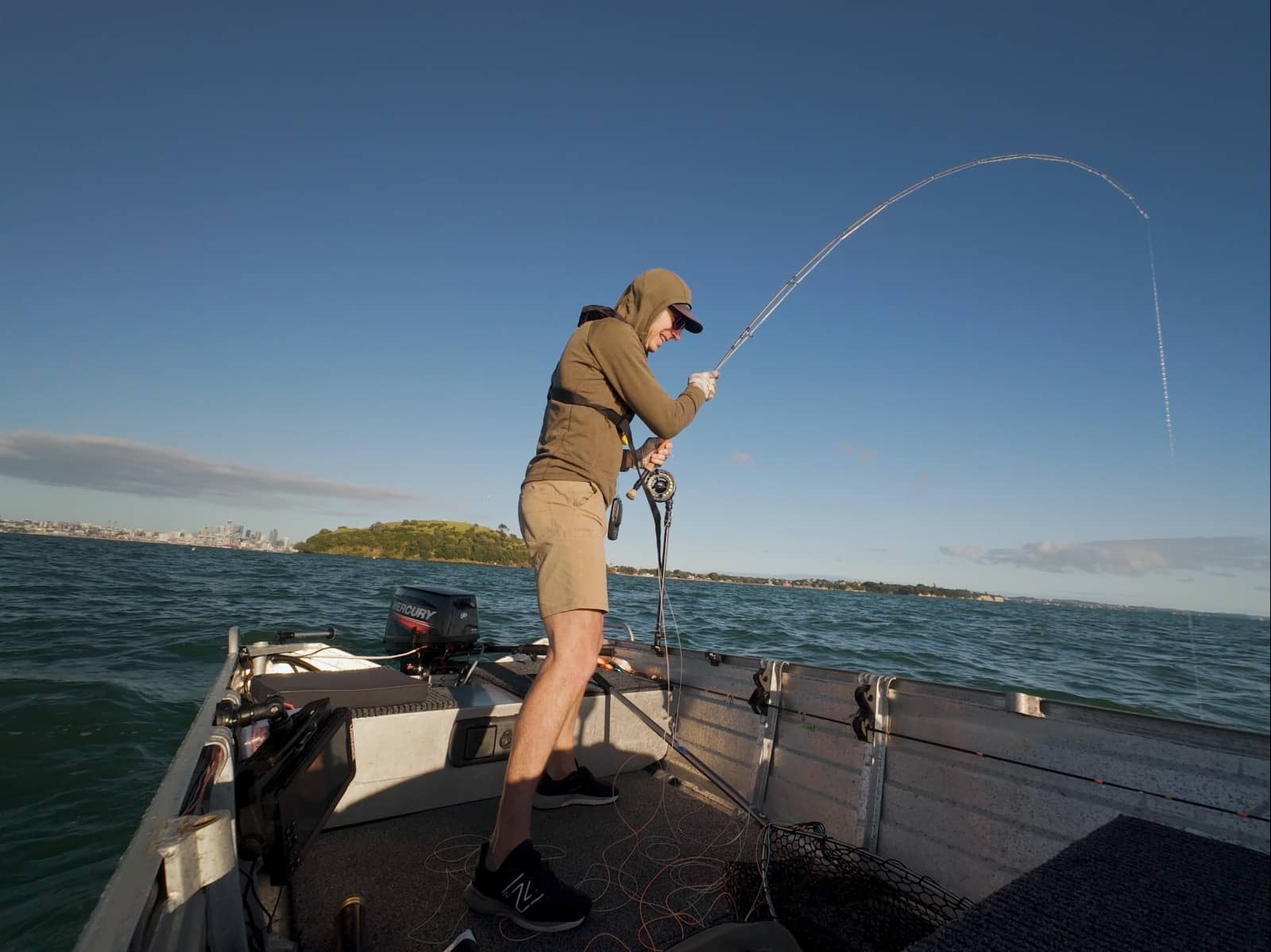
It's early autumn now, as is the way of New Zealand, and in Auckland the ever-present wind is here to greet me. I launched early and went looking for fish, not sure what target species would show.
Classic harbour fishing. Boats on the move, a tanker sliding past, the Waiheke ferry thumping through. Not quite what you picture when you think fly fishing, but that's part of the appeal. Auckland is busy, noisy and working, and the fish are there anyway. Plus it's close and doesn't involve a big drive. Although I must admit I'm starting to feel the pull of winter trout fishing — with the right timing it can be productive in the limited open waters around the country, and the boat might come in handy for a few of those adventures. That's for another day.
I ran out to a few markers first. They looked good. You live in hope — the next cast could be the one. Nothing there. That's familiar enough. A lot of fishing is just carrying on, exploring whatever comes to mind. So I moved on, kept prospecting, and started looking more carefully for signs.
Then I found a boil-up in the choppy sea. No birds diving, hard to spot — but like all fishing, it's about moving carefully and staying alert to the signs. A couple of bites, fish on, then another. The quiet start didn't matter anymore. The boil-ups in the prior months had mostly been mullet, which are a nightmare to tempt on the fly, so finding energetic kahawai chasing bait fish was a proper surprise.
I like kahawai. On the fly they are excellent. They pull hard, eat properly, and when they turn up in numbers they can turn an uncertain session into a very good one. Most of them at the moment are on the smaller side, but there's something satisfying about catching them in the middle of the city anyway. Urban fly fishing has its own feel. Not wilderness, but real, accessible, and on the right day very productive.
These harbour sessions earn their keep another way too. They keep the casting alive. Even when the fish are slow, there's value in being out there making decent casts and staying sharp. Then when the fish do arrive, you're ready. The boat is part of it — learning to use it and cast off it is its own thing.
A few quick observations on casting from a boat. With the rocking, my haul has reverted to a stunted level, which is clearly my go-to comfort position. Paul's lessons and then my park practice have at least instilled a high haul speed, so that saves me. I also suspect the best connection to fish is at 60–80 feet — any longer and the strikes get harder to convert. So my comfort range works, but for aesthetics and technique I'll keep working on it. As Paul says, one day when you need the cast, are you ready? I'll put this in that box. With boil-ups there are so many fish that shorter, faster casts actually land more — for those of us who love distance, you have to rein that love in. The stopless cast is harder for me on the backhand, so that's another one for the practice list — remember the bells on the back and forward cast to aim for. And not letting go of the line with the line hand is non-negotiable now, ever since the snake head experience. When the fly lands you want an immediate connection so fish takes get maximised.
Eventually it was time to head home, back past the Waiheke cat and into Okahu Bay, which always feels better after a few fish. Early autumn in Auckland Harbour. A good way to spend a day.