Chris Avery | Wednesday, 12 March 2025
*I have a dream that one day even the waters of Willowbrook,a stream sweltering with the heat of climatic change, choking in the siltation from agriculture and enriched in the toxins from man’s ‘progress’ on the world. Will have pockets transformed into an oasis of refuge and safety for those little fish and insects. I have a dream.
I have a dream that my Trout will one day live in a brook where they will be able to reach the upper waters naturally, driven by the contents of their character, no longer restricted by the oppressive needs of the machines of mankind, dictates of balance sheets and bottom lines, and constrained by mortal permission. I have a dream today.
I have a dream that one day down in Apethorpe within its canalised banks with the concrete sluice governing its flows, Those cracked concrete lips dripping green algae that chokes the sweet summer flows. That one day, right down under new cool dark shadows, clear waters will intermingle with clean gravels and Trout will again find a home here to raise the young in winter, a place to nurture and protect the babes through spring, shelter and safeguard them, to thenrepopulate the Brook for future summer days. I have a dream today.
You get the idea?!
( *with no disrespect intended to the original speech and with due recognition of the historic cruelty which it reflected).
Writing this stuff for Sexyloops took me up into that field by the last beat of the Brook again, after many years of absence. It was often flooded in winter; and now in spring and autumn too these days. The grasses are poor and tough, it has a few remains of twisted and cracked old Willows and Hawthorns. And along one side the raised grassy berm of the Mill Leat.
When this land was cleared by the bronze aged farmers from the primordial forest thousands of years ago, it would have had a very different prospect as it gained in fertility. It now feels like it’s at the end of its useful life, a blasted heath, an afterthought.
When the club ran the Egg box hatchery project, it was located in a hidden corner of this meadow. We would draw the water from the Leat just as it gathered pace and raced into the sluice, our chrome gauze filter head plunged down into its current. So I would regularly visit this land and see it in all states and conditions.
Seeing it on the bleakest days, I presumed this as poor grazing land, and rarely used, but still a barb wire fence runs the length of the water making casting and landing fish a faff and increasingly tricky as the season progresses and the banksides grow. And yet occasionally in a mud cast you see the hoof mark remains of the cattle of summer, when this beat is dismissed by us snotty Trout fishermen as merely large Chub water and rarely visited..
On our daily drive there to check the filters and clear any silt from the top of the gravel, we would see some really emaciated ponies and donkeys in this field. It was leased by some chap who seemed to have fallen in to a rut between his old dreams and desires and a growing neglect, his life winding down to a grinding halt. Wretchedly these poor creatures and their sufferings were the visible symptom of his crippling lethargy.
In coldest days of winter the reluctant static shapes in the gloom, never making a step, panting steamy breaths through rib cages that were clearly visible, yet never mercifully covered up in blankets, no matter how cruel the chill. We thought about bringing some carrots or apples but someone from the village advised against this kindness, warning their teeth were too poor, the help they needed was vetinary, and beyond our charitable feelings. My partner eventually had enough of seeing the suffering and rang the RSPCA. Apparently this was not a solo voice, and she became part of the chorus of a growing choir.
I’ve rarely seen this blighted heath with its broken stumps used since for anything agricultural and the provision of food. But then, I rarely venture up there from the crystal clear babbling brook waters we happily wade through, not too far down stream. Though I heard tell of the family of delighted Otters playing here after one of the floods, harvesting through the puddles for stranded Chub and chasing their wakes through the emerging tussocks as the waters receded. And often in this marshy state; Herons and Egrets stalk among the carrion birds to pick off the stranded fish.
To the other side of the field, crucially, is a ditch; a drain; a dip in the ground; a little channel; often barely visible within the weight of fallen wood; bramble; and Ivy tangle. In places it can be glimpsed in little sun bleached, swollen pools looking almost static; stagnant. In other places, between the chorus of ‘Cawing’ from the nearby Rookery, or the silver sound from Larks singing near the heavens above. In a rare pause of almost silence, you hear the precious background trickle from the undergrowth, as these little pools overflow and the stranded waters tumble along unseen, searching for a route back to mingle in the comfort and flow of the main waters of the Willow brook.
Occasionally I am forced to squint, dazzled by twinkles of tiny brilliant shards escaping from the dark gloom of undergrowth. Evading those tangles of the Bramble shade, as a ray of sunlight over the far bank catches the hidden waters, it then fractures up off the cascading surface as the stream trips and stumbles over a rock or log. With eyes now closed from the unexpected sparkle, I feel marvellous fingers of warmth stroked across my cheeks and brow, as little photons, after an unimaginable age of their ‘random walks’ within the sun, escape that furnace at last to make a mad eight minute dash across the universe directly to this spot, to then collide, randomly reflected back from that crinkled surface to find this haphazard resting place, an end to the odyssey. The last remaining energy in these particles diluted on my own cheek and brow, leaving me blessed, lifting my spirits with a startling, yet comforting glow after the long bleak winter, with their promise of summer ahead..
“Have you seen the light?” the pious demand. “Felt it, and been dazzled by it along the banks of a Trout stream, and yes it felt like a miracle all right; that, or a clarion call for action!”
In other places the tiny water course is open and its banks trodden in, the land around corrugated from cattle hoofs as they either drink, or trample across to the paddock on the far bank in summer when they are returned to these meadows, swamping the tiny waters with silt and soil to choke what few gravels remain, adding manure and urine to enrich the waters terribly.
Eventually leaving the paddock, the trickle is uncovered for a length. It flows by a footpath towards that mill, here we drained the water from the hatchery box into it. Its course dips to the right, to flow unseen under a small stone bridge where the dog Otter often leaves his fresh smelly little mark, his Spraint; to remind one and all that the incumbent human mill owner may hold some silly paper deeds to this address, but that it is this creature that has fought, conquered and paid in blood for this particular postcode, for now.
Its last yards before meeting the Brook is through a small orchard garden, besides a tennis court and a nearby potager vegetable garden, usually bursting with produce that’s more for show than the needs of any nearby table, here our stream runs through banksides of manicured lawn, very John Constable. What a change of fortunes in a few hundred yards.
I had wrongly assumed this was a kind of overflow of water from the mill Leat that trickled seemingly useless around that meadow or two and then back into the Brook, its serendipitous course the result of the drains dug around old field boundaries. And its contribution to the Brook, merely a further burden of silt, and unwanted enrichment..
Then when writing about the ancient history around the banks of the Brook, I came up here to work out where the Roman offices and courtyards had been uncovered, as drawn up on the maps and labelled intriguingly; “Gold Diggings”. And where they had loaded grain and whatever produce the grew, onto boats to ferry it down to the river Nene. The mound is there still, a natural plateaux on a gradually rising hill. And with a little imagination, or the help of a map, time is turned back.
Unless this gentle landscape in enduring Old Blighty has suffered major upheaval in the past few thousand years, those boats would have travelled from somewhere around this ditch when it must have been wider and deeper. Then I realised; before the Mill had stolen its waters.
It finally dawned on me after years, that this poor choked up drain was actually the real historic Willow brook, or what little remained. And those field boundaries had been defined by its course, and had not dictated its route. Furthermore it still had natural meanders, the basis of pool and riffle sequences, it was of the right depth and crammed with cover for successful Trout fry habitat. More so, it had a potential for stronger flows via that sluice that controlled the mill Leat and some in-stream modelling and squeezing of the current. The place despite all, had wonderful potential.
Which eagerly got me thinking about opening up this stream again, finding a way of increasing the flow by trapping the silt into the sides and reducing the width of the channel. Even if it results in being barely a foot or two wide, as long as it flows along with enough force to sort particles and keep some gravel beds clean.
With fencing to direct the cattle onto a bridge for them to cross to the next meadow, or even just add hard stone for a crossing point and provide cattle drinkers to keep them out of the waters. Then maybe we can introduce gravel areas for migrating Trout with a hope of keeping it clean, and create the perfect fry habitat in depth, then increase the cover and protection from above.
This is not opening a new beat for fishing, this could be the new nursery and sanctuary for the Willowbrook Trout; nature’s own stock area.
Could we, I wondered, in fact take down a little more of the old sluice wall that was already crumbling and reduce the level in the now redundant Mill Leat. Borrow those waters back. Surely that would help reduce the regular flooding of that meadow while returning extra needed flow to the banks of the real Willowbrook.
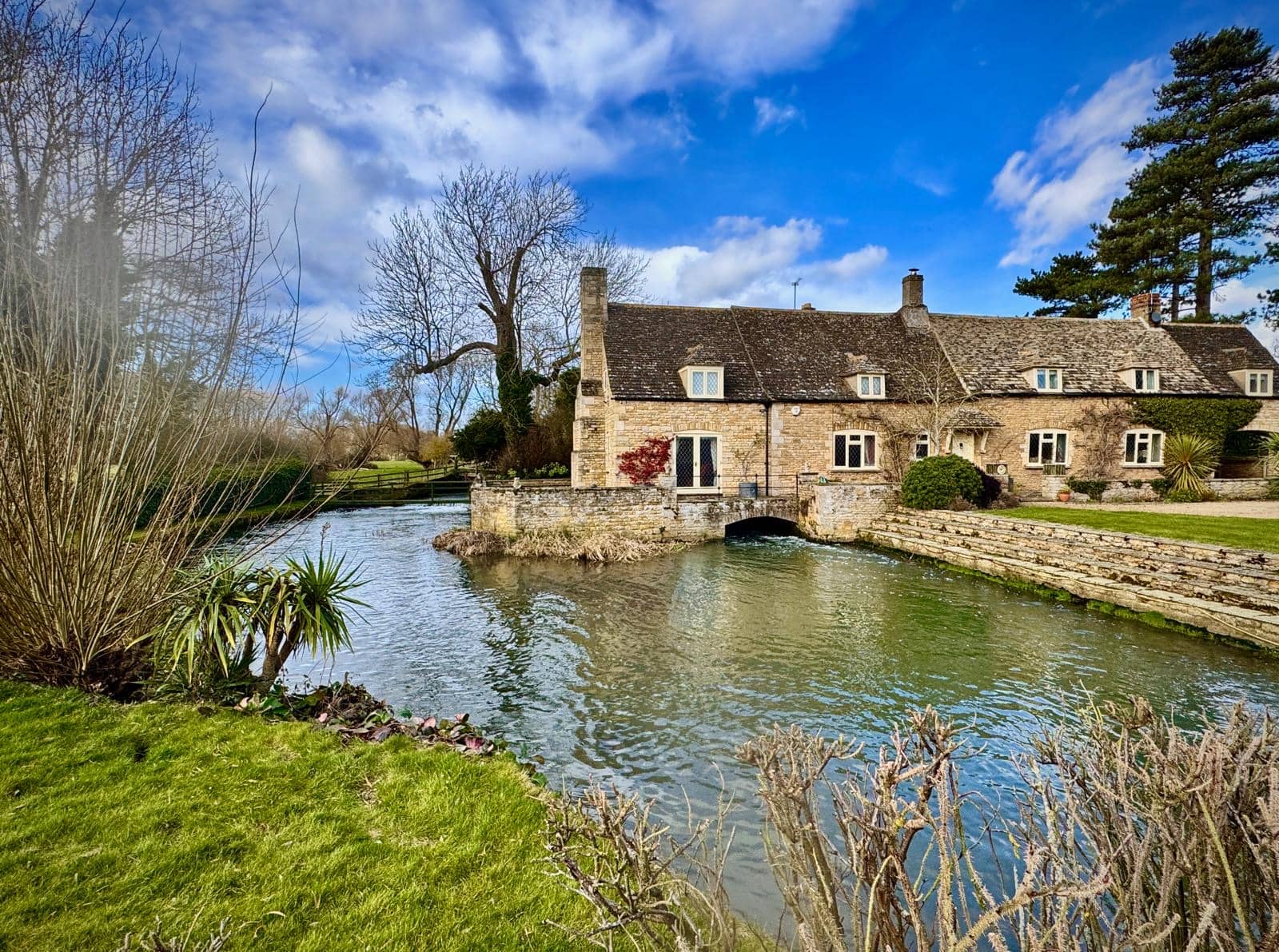
It may even benefit the owner of that large expensive cottage which was once the working mill that needed those roaring waters. Though after 50 years of living with the sound, he’d probably find its absence too uncomfortably loud to deal with.
Come the day of the glorious revolution brothers, I will have that Mill seized and the owner forced to watch as we smash the concrete and stone sluice, liberating those pilfered waters back into the Brook . We will drain that mill Leat to a trickle. Then my luddite brothers and I will fill in that mill pond with soil and make a garden out of it, with a little stream cut down the centre to take the remaining trickle. And people will look down from the bridge in years to come and wonder why such a wide bridge for a little trickling gin clear stream. And the ones with longer memories marvel at the transformation; “My, what a nice garden in front of that lovely old cottage now. What a marvellous change from that muddy old mill pond with its stone blocks and sterile banks… Why, it almost looks like a Constable painting on a chocolate box !”
The Cottage will still be a grand dwelling. Quieter, maybe without the rushing waters, but visually just as quaint. Those public passing on the footpath by the expanded Willow brook waters will still see an old mill with the remains of a babbling brook, and the Trout will at last have somewhere upstream in autumn to head and then lay those eggs and increase the presence in the Brook.
But the Revolution is on hold, and the climates getting more energetic, seemingly with every news report, so for now the Mill pond is safe., We need to do what we can and fudge a solution to preserve that gene pool!
Next … Those precious Genes.
Happy windy day to all out there in sexyloops land, may your loops be tight, your tracking true, and your waders keeping you warm, snug and dry.