Paul Arden | Tuesday, 6 May 2025
It was interesting how three-quarters of my students disappeared during Jan-March this year. Apparently there were two things at play. One was the cold and miserable second half to the US winter, and the other, that’s been mentioned to me many times now, has been the uncertain politics.
I don’t get involved in politics. It’s too divisive, with many people having totally intractable and highly polarised opinions. And while — as you can no doubt imagine for someone who’s spent 20 years travelling and sleeping outdoors and another ten years living on a boat — I do have strong views when it comes to personal freedom, fellowship of man, that sort of thing, fly fishing is what I do and for me it’s more important than political opinions. For me we are all on the same boat and we should learn to deal with it.
Anyway, it’s great to see my students returning to lessons and training again. Some very interesting developments too and all have improved! Taking a break from training is also an important tool. I have regularly done this myself. It can really help when we hit a stubborn plateau. It’s like pushing a reset button.
It’s also quite relieving as well of course… just imagine if improving casting skills was like Snakes and Ladders and we all had to start over again after a break! :D
When it comes to structuring training, just going into a field and casting without purpose is only going to get you so not-very-far. A training session needs to have purpose. Ideally, improvements should be measurable as well. Most casts I think should be thrown to targets, positioned at varying distances. This includes Rolls, Speys, Presentations, and not just overhead accuracy. The only time we don’t use accuracy hoops is when practising all-out distance. There is not much point in having a killer Single Spey Reach Cast, for example, if the fly doesn’t land in the right place!
One of the most important tasks of any coach is to help structure this training time. I generally set 7 or 8 drills, as well as exercises, each lesson. We discuss how much time to spend on each drill and which casts and exercises to train before the next meeting. Really how to go about it. Taking notes is especially useful: what works, what was difficult, what epiphanies occurred and any questions that come up. I recommend students video themselves from regularly too. If they can Zoom meet then they already have all the tools required to do this. Ie a smartphone (or iPad) and a tripod.
This is also handy for me too, because if students send these videos over to me, I can then reshare some of these videos to other students when appropriate! Rickard’s 170 videos for example have become a gold standard for me to share. Rickard’s greatest fear in life, is when I start sharing other students’ videos to him :D
Next week I’m going to start uploading casting and fishing videos again. We are also working on the new Sexyloops website. And many thanks to Rickard for his amazing help! It turns out that he’s not just an outstanding flycaster but also understands computer voodoo.
And now I’m going fishing! Have a great week :))
Cheers, Paul
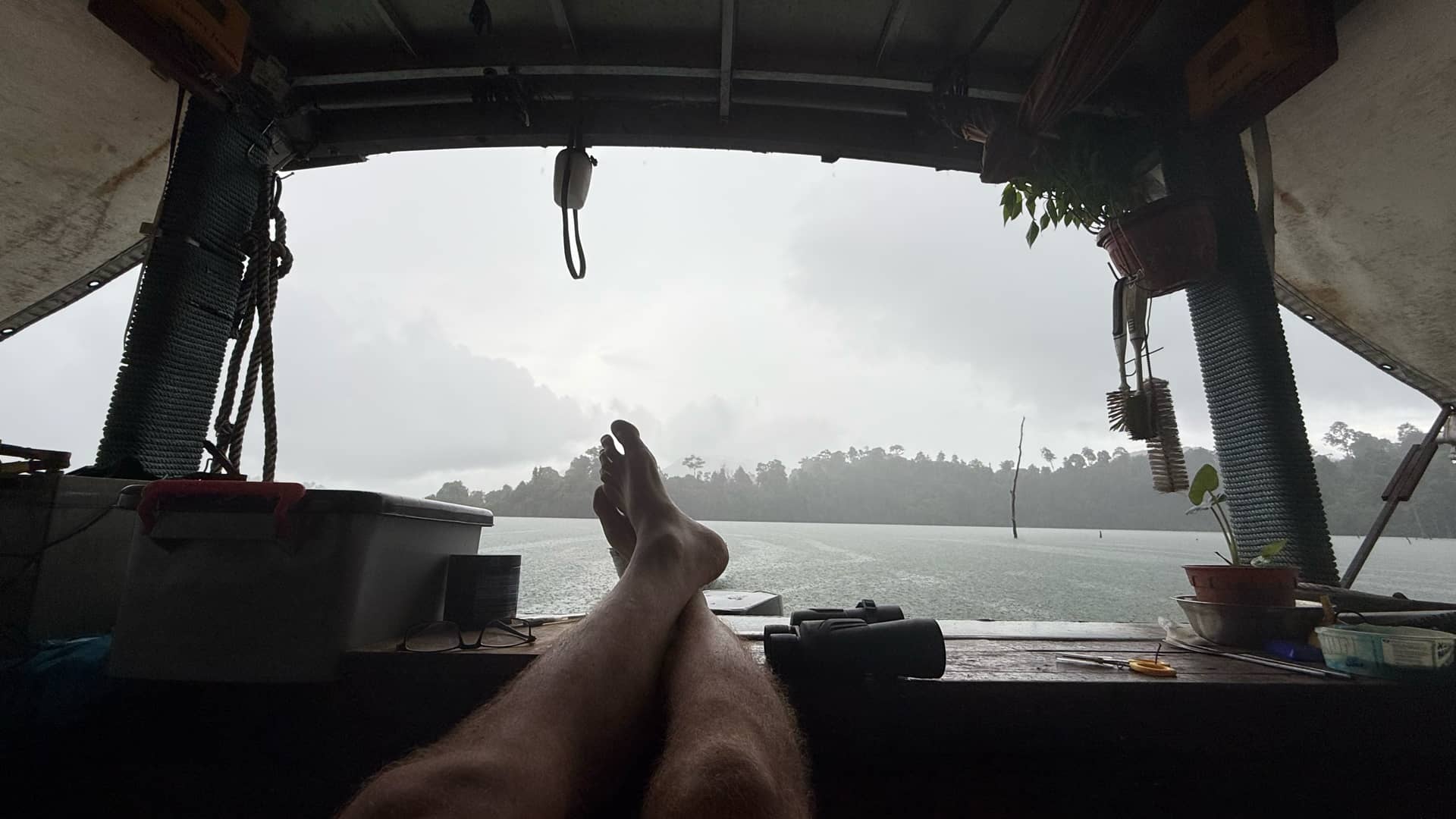
Today’s PoD: raining almost every damned evening!