Martyn White | Thursday, 2 April 2026
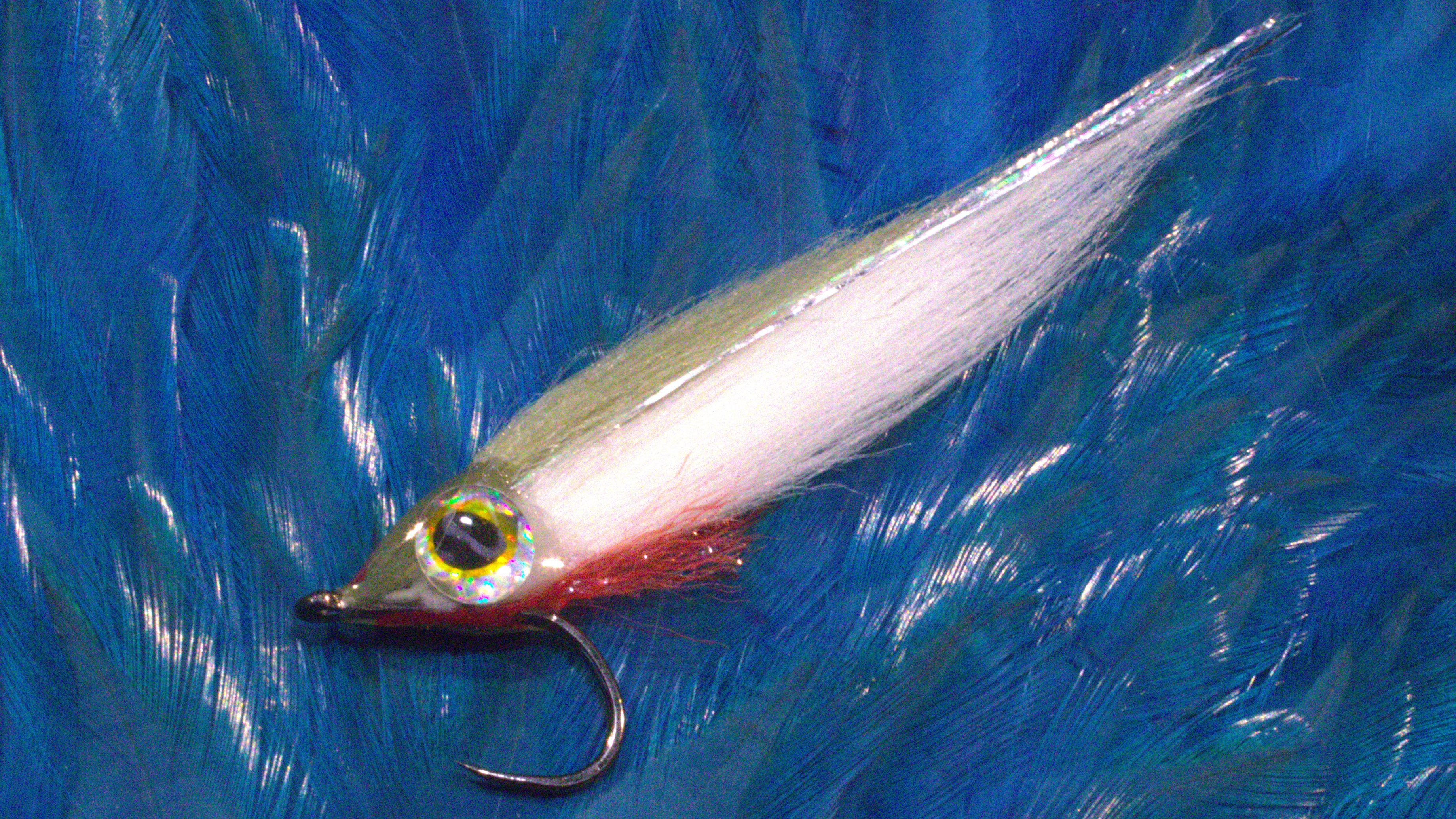
This week, I'm giving you another saltwater fly; the polar fiber minnow. It's a pattern that's been kicking around for a few decades but maybe isn't as popular as it should be.
I suspect that a large part of its underratedness is because when it initially became popular, there were a lot of people putting their own spin on it without understanding the important parts of the pattern and effectively making it worse while also calling it a polar fiber minnow. BUT! Tied properly it's a great small baitfish pattern. It works in fresh water, it works in saltwater, it's durable, it requires few materials, it's a relatively quick tie, it can be deadsticked but it tracks true at speed and never fouls or tangles. What more could you ask for?
Here's the material list:
Hook: Something short and stout- SL12 short, flyliners, Glo-bug, octopus or even a carp hook will work
Thread: Fine clear mono
Gills: Red fluoro fiber, flash, EP fiber or similar
Body: Polar fiber & flash of some kind
Eyes: 3dD eyes- oversize them slightly
Finish: UV resin
As you can see it's a short list and the fly is simple, but to make sure that it fishes properly there are some things you need to do right.
- Make sure all of the polar fiber is tied directly on top of the shank- DO NOT let it roll to one side.
- Pre-trim the bunches of polar fiber and make the tie in short with no loose butts.
- Use the step at the end of the previous tie in to kick up the next one helping the high tie.
- When coating the head make sure that you create a sort of triangular shape with the bottom corner at the hook-bend.
- Make sure the head is perfectly vertical before setting, it should make a straight line with the bend, spear and eye when viewed from the front.
You can use essentially any synthetic material with the same tying style especially if you want something bigger. Craft fur, and pseudo hair are the most similar and will give you a different look but are roughly the same length as polar fiber. EP and SF blend will work well, but need to be manually tapered.
Sharpies are your friend and are ideal for marking them up to suit different locations. You can do it at the bench or just tie a load in a generic colour scheme, say tan over white, and carry a few pens in your bag to customise them on the water.