Martyn White | Thursday, 9 July 2026
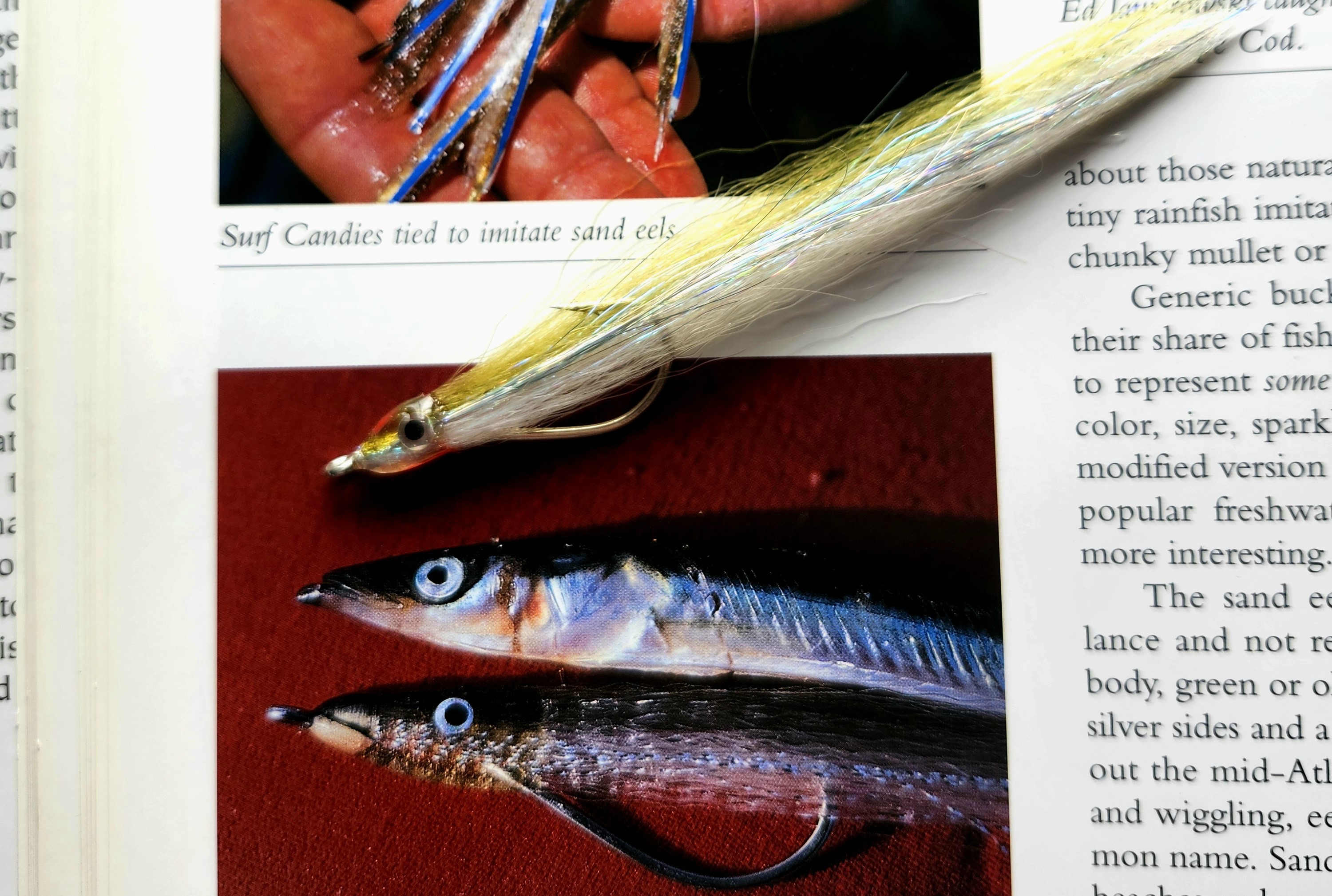
This week I thought I’d share another sand eel, or sand lance, pattern. There are plenty of them around, some of them a lot more complicated than they need to be.
I like simple flies that work, and this one’s lovely and simple.You can easily adjust the sizes to suit your fishing situation. Another thing I like about this is that it’s nice and durable, so you’ll get plenty of fish on it or lose it before it falls apart, I’ve even more than a few of these where the dressing has outlasted the hook despite studious washing in fresh water after use.
I first started tying these years ago, back in the dark days of 2-part epoxy, inspired by a photo in the bait section of Bob Popovics’ Pop Fleyes (POD). I’d say it’s roughly the same principal as the big Keel Eel that’s featured later in the book, but a bit easier to manage as there’s less need to build up a large resin head. And although the fly is a bendback, which makes it ideal for fishing over the type of broken, sandy ground that sand eel love, you can tie it on an unbent hook if you like without going to a full surf candy as long as you make a couple of adjustments.
Here’s the pattern:
Hook: stainless 6 -2/0 bent
Thread: Clear mono
Body: Olive or Brown over white super hair
Lateral line: silver flash (crystal flash, flashabou, angel hair-it doesn’t really matter which)
Eyes: Flat tape sized to suit; 2-4mm should cover all the sizes
Finish: UV resin
If tying a non bendback you need to do 2 things to prevent fouling. The first is tie a sprig of mono out the back of the bend to act as a foul guard-maybe ¾ of a shank in length. A mono loop will ruin the swim, but the straight piece won’t while still providing a good degree of anti-fouling effect. The other thing is to tie it in the round, so the material encompasses the shank evenly. These steps will help greatly with keeping the long fly from wrapping round the bend. But really, just tie the bendback, it’s great.
Here's an, I think interesting, video about sandeels and their lifecycle. It's always worth getting to know the forage species. This is on the Eastern seaboard of North America, it's broadly applicable to the Eastern Atlantic and North Sea too.