Martyn White | Thursday, 20 August 2026
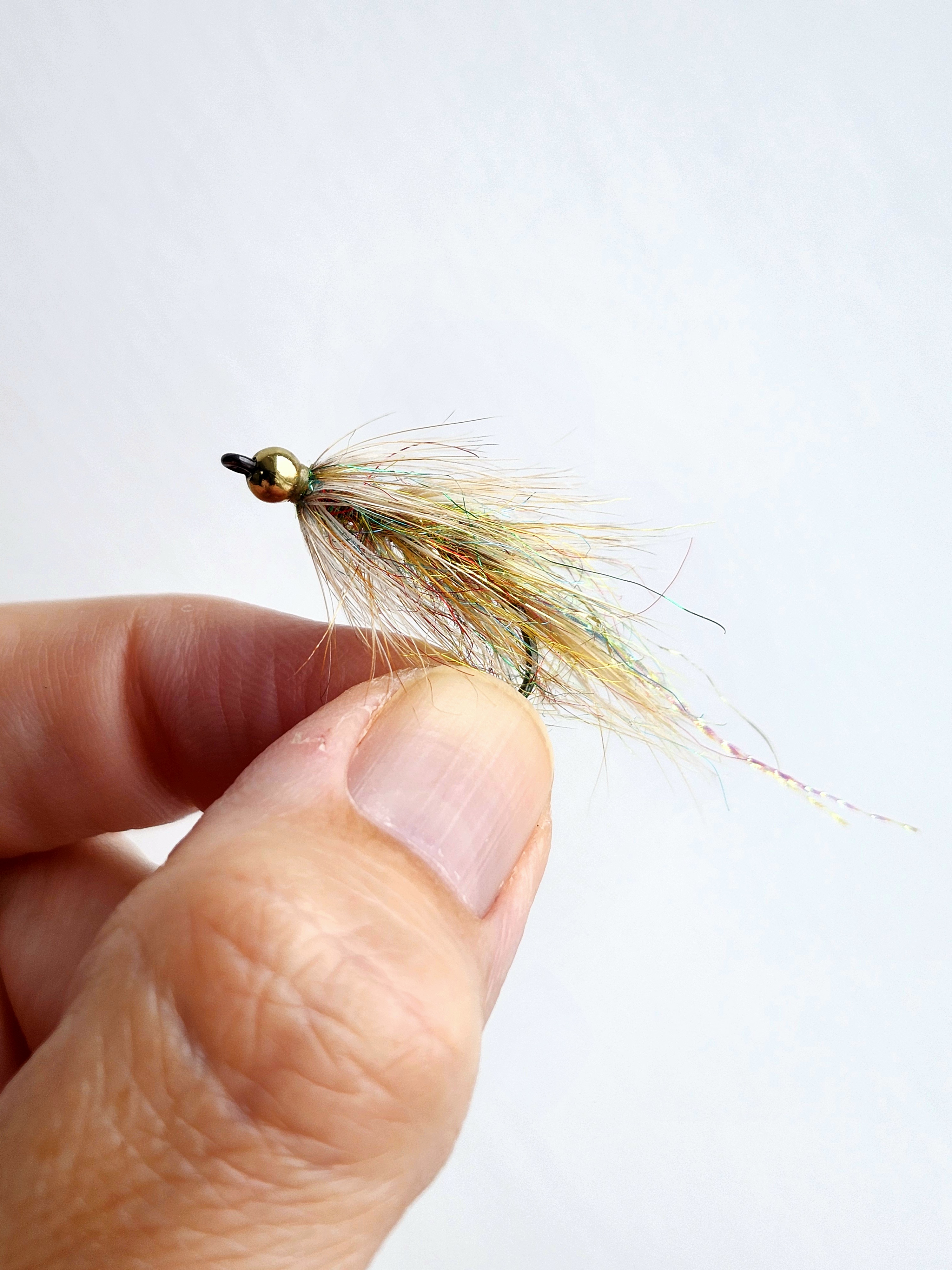
Another coastal pattern this week, but a move away from the mullet to a suggestive seatrout pattern that you can press into service for bass too: the Brenda!
I caught my second ever seatrout on a Brenda, the first being my first ever fish on a large toby that was part of a birthday fishing set I got on a family trip to Ullapool when I was about 7. It's not a fly I fish much nowadays, but that's largely due to living in Tokyo and rarely getting a chance to target sea-run salmonids. But being back in Scotland brought it back to the fore when my spooky mate Alan caught a nice fish on one I'd tied him 20 years ago. He'd never used them because he never actually got round to exploring the saltwater options and it took me coming back from Japan to give them a try!
I don't think the Brenda really imitates anything, although I've heard people claiming its a ragworm pattern. I don't see it, although it does work well when the worms are hatching/spawning. I'd rather use a more wormy profile in the same colour if I'm sure that's the feed. I think that really the Brenda is just one of those flies that looks like food. It moves and is roughly the shape and colour of several things a fish might eat.
Here's the dressing:
Hook: Saltwater 2-8, I like the partridge traditional shrimp and carry size 2 and 6
Head: Gold bead to match size- I prefer brass to tungsten
Thread: tan or light olive
Tail Ginger/red game hackle fibers with some rainbow crystal flash over
Body: Salmo select dubbing rainbow- tied in 3 sections
Hackles: Ginger/red game separating the body sections and at the collar
You can decide how light or dark you want the hackle, I usually tend towards gingery rather than red game. I doubt it makes much difference really. I also like the look of a bit of dubbing just to tidy up behind the bead, but that's entirely superficial. Do make sure and get that dubbing brushed out well to draw out the flash and mobile fibers into the hackle, I'm convinced it makes a difference especially in winter when the sun is lower.
The Brenda colour scheme also lends itself well to your other patterns, a more imitative shrimp or goby pattern for example tied with the ginger hackles and salmo dubbing can deadly, and can help with confidence if you prefer less generic patterns. Either way, you want these in your box and not just for northern Europe. If they work in Hokkaido, Denmark and Scotland, I'd bet they'll work on coastal trout and charge anywhere in between!